
Why Middle East Retail Keeps Growing While European Retail Stagnates
The franchise renovation cycle driving one market forward — and what Europe is missing.
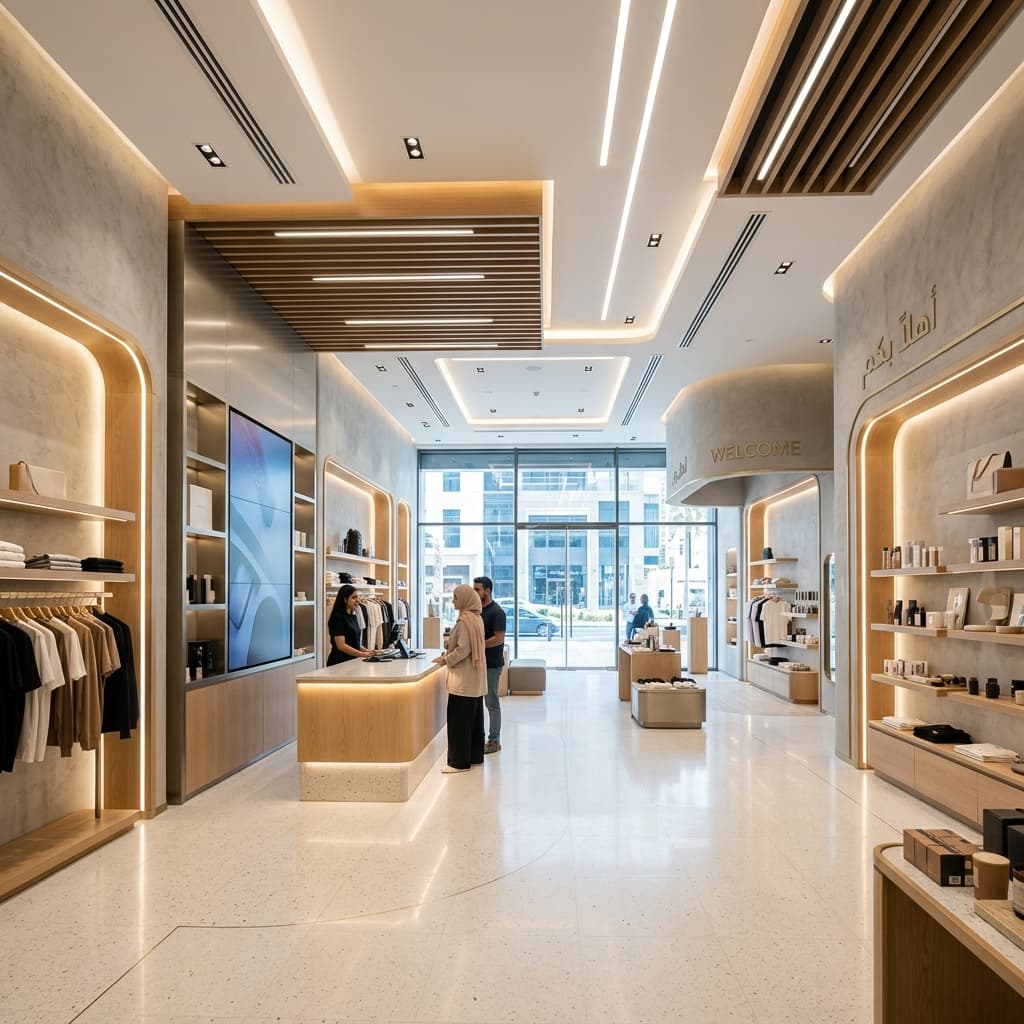
The performance gap between Middle East and European retail is visible to anyone who has operated in both markets. UAE malls consistently outperform. Brands that struggle in their European home markets often find unexpected commercial momentum in the GCC. The reasons are structural — and they are not widely understood.
The Franchise Renovation Mandate
The majority of Middle East retail operates through franchise structures. This means that renovation, relocation, and redesign are not optional decisions — they are contractually required. Franchise agreements typically mandate that operators maintain current brand standards, update store concepts on a defined cycle, and invest in the physical environment on an ongoing basis.
The result is a retail landscape that is structurally dynamic. Stores look current because they have to. Concepts evolve because the contract requires it. Consumer experience stays fresh because freshness is not optional.
What This Means Commercially
When a store is renovated, it does not simply look better. It performs better. New layouts are calibrated to current consumer behaviour. New visual merchandising reflects current product priorities. New staff environments drive better team performance. The commercial impact of a well-executed renovation is measurable and consistent.
In the Middle East, this cycle happens continuously across the retail network. In Europe, the same store concept can run unchanged for a decade or more. The commercial gap that opens up is not dramatic in any single year — but it compounds.
The European Contrast
In European retail, renovation decisions are driven by ownership preference, cost avoidance, and the absence of any structural requirement to invest. Family businesses hold on to concepts that no longer perform. Corporate retailers defer capital expenditure until the performance decline becomes impossible to ignore.
By the time a European retailer renovates, they are typically recovering lost ground rather than building on a strong foundation. The Middle East operator, by contrast, is continuously investing — and continuously compounding the commercial return on that investment.
What This Means for International Brands
For an international brand entering the UAE, the franchise renovation mandate is both an opportunity and a requirement. It is an opportunity because the market expects current, well-maintained retail environments — and rewards brands that deliver them. It is a requirement because franchise partners who do not maintain standards lose their commercial position quickly.
Understanding this dynamic — and building it into the commercial strategy from day one — is one of the most important steps an international brand can take before entering the Middle East.
How FeniXperience Helps Brands Navigate This Reality
FeniXperience works with international brands to build the market intelligence and operational framework that allows them to compete effectively in the Middle East retail environment. This includes franchise partner assessment, store performance benchmarking, and Go-to-Market strategy that is grounded in the structural realities of the GCC market.
More Insights
Why International Fashion Brands Underperform in the UAE
The product is right. The location is right. But results do not follow. Here is why.
The Middle East Is Not One Market
UAE, Saudi Arabia, Qatar, Bahrain, and Oman each operate by different rules. What brands need to know before expanding.
Ramadan and Retail: The Window Most Brands Miss
One trading period. One third of annual revenue. Most brands are not ready for it.